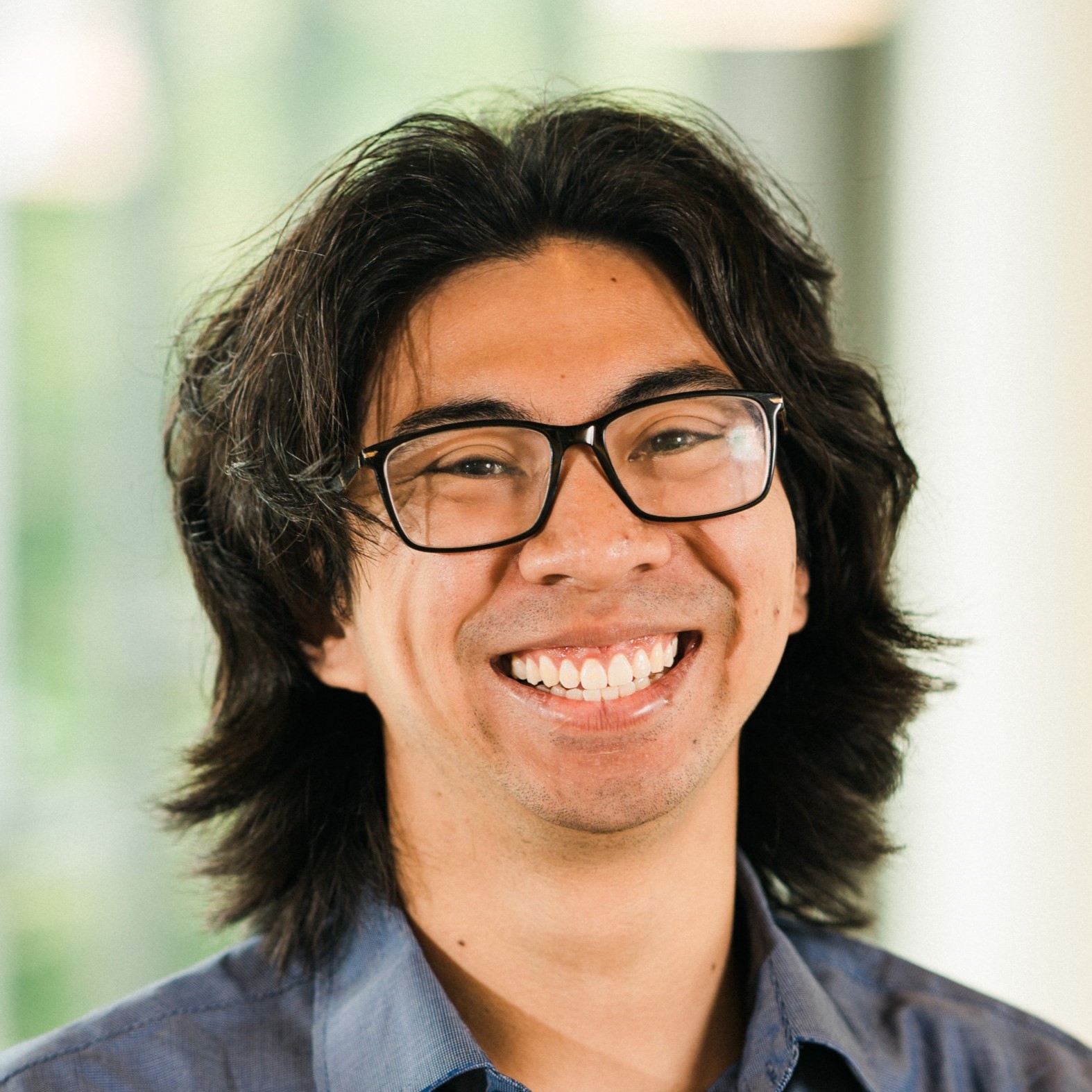
three weeks into three months
i’m writing this post from england once again, this time in an apartment up in london. it’s in a really nice area, and i’m walking distance from hampstead heath, which is a really lovely place to walk around, introspect, and recharge a bit.
and this indeed is a summer where i’ll need a lot of recharging. i’m planning to be on the economics job market this fall — for my non-econ friends, the most relevant part of the process for this post is that i need to have my “job market paper” (jmp) done by september 1. your jmp is supposed to be a paper that showcases the peak of your ability and the type of research that you want to be doing.1 these days, they regularly run over 100 pages, with lots of side discussions for robustness checks and extensions of theorems and all sorts of other things. you’ll then submit applications for hundreds of jobs, hoping for interviews at a handful, and flyouts to an even smaller handful, at which you’ll give a talk about your work, chat with faculty, and, hopefully, get hired.2
i’m in that part of the process where you hunker down, run a bajillion regressions, think for hours on end about your framing and proofs and models and regressions, and then try to put it all down on a page. what’s prompting this post is taking a break from all of the writing i’m doing — about a week ago, i finished my first draft, and now it’s time for somewhat of a respite.
to be clear, “finished” is a very strong word. there’s lots of words that exist (per Overleaf, 10319 words across 53 pages and a gazillion tables and figures), but there’s still so much to do. several notes with comments like “i don’t know if i should reorganize to be X” or “is Y a more interesting result?” or “i haven’t written out this proof, but here’s the intuition” or “this extension to the model needs to be finished”. but at least there’s way more words on a page than existed about 4 weeks ago.
amidst the backdrop of all of this academic writing looms one big question: what do i want to do next with my life?
it’s funny, you know. almost exactly six years ago, i was in a very similar boat, thinking about what i wanted to do after undergrad — grad school, work for a while, and many, many other options. i started blogging the summer before my senior year of college, and on choices, arbitrariness, and storytelling was the first post i felt really proud of. it’s the first part of a (spiritual) trilogy3 of posts documenting my eventual choice of being in grad school, followed up by on success, meaning, and time and leaning in, in which i actually choose to go to grad school. rereading these posts, it’s so interesting to see the thoughtfulness that past me put into these decisions (though of course, with some amount of wide-eyed naivete4), the values i was using to choose lives, the things i was unsure about that since have come to pass. all of the ways that the person i was back then has led to the person that i am now.
of course, there’s many ways in which i have changed, too. a lot more understanding about myself and my values. lots of new thoughts about identity, particularly surrounding gender. the ways in which i spend time alone and with others takes on different forms. i’m doing way better at prioritizing having a work-life balance (which to be honest, i don’t think i really had in college). to be clear, i’m still doing so many things, and that’s also a way in which i’ve changed — i’ve picked up so many new hobbies, including dnd, puzzles, acting, musicals, and much more.
but it’s six years later, and it’s time for yet another round of introspecting about what i want to come next for me. much like several years ago, a few things hold true:
- sometimes, there aren’t “right” choices, only different ones. i’ll be happy down so many different paths. and i need to make sure i don’t overthink it.
- at the same time, it’s important for me to approach decisions with care, and to think the appropriate amount, to reflect on what i’ve learned from life so far.
- being realistic, the economics job market isn’t great. i am thankful to be confident in the fact that i will be doing something next year — it’s just a question of what that thing will be, and how many options i will end up deciding between. it might be just one or two, and that’s very much ok.
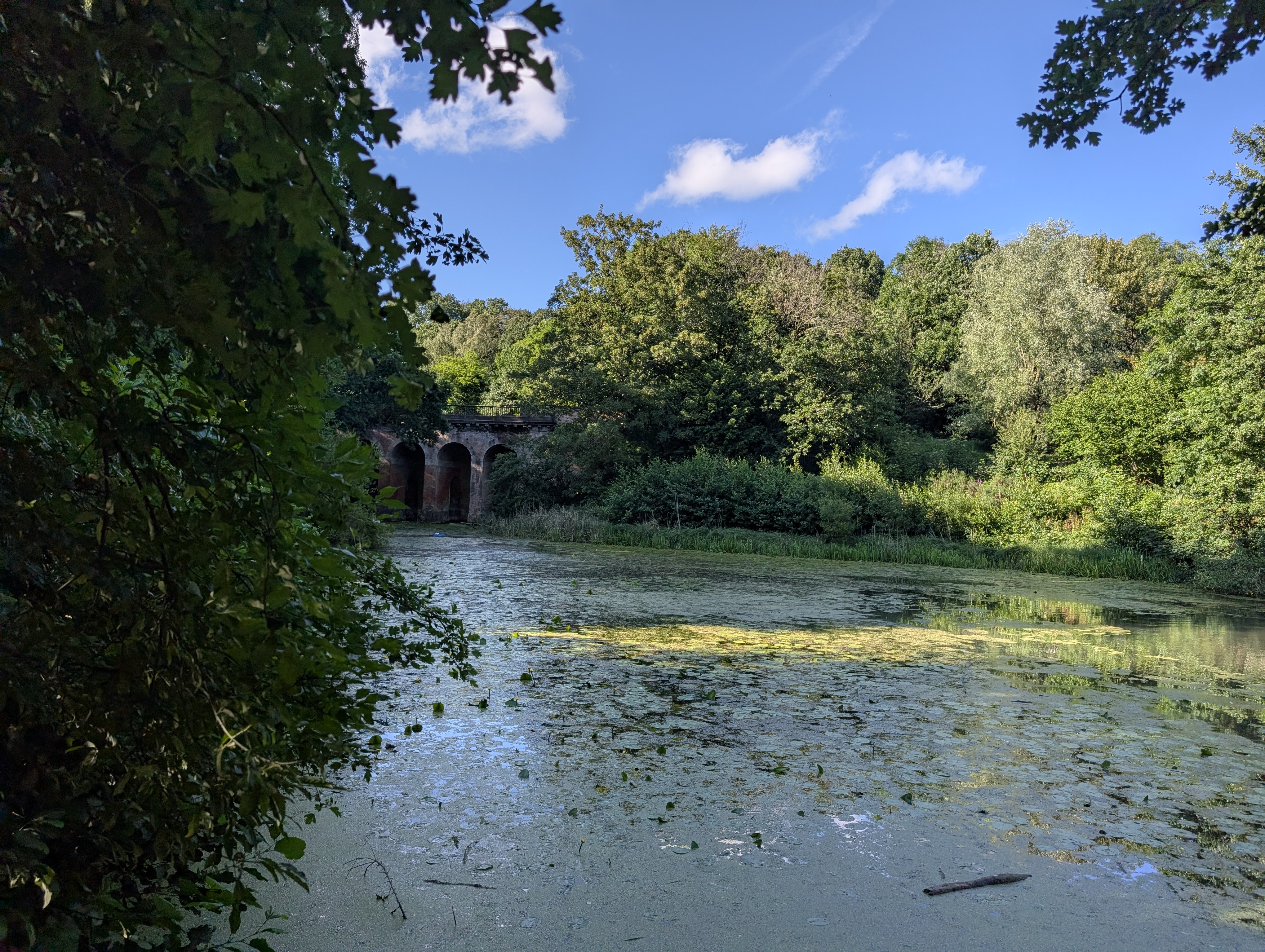
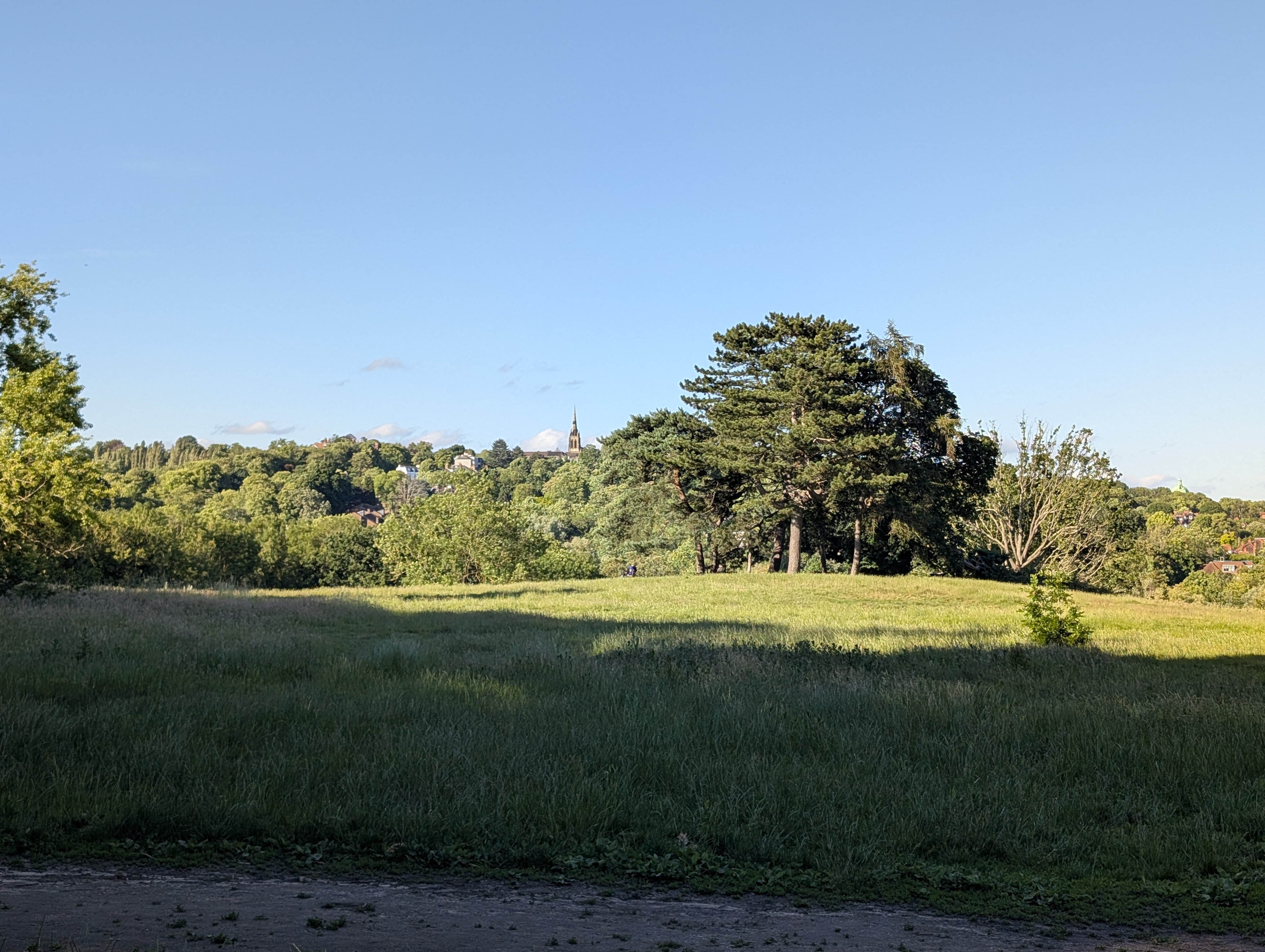
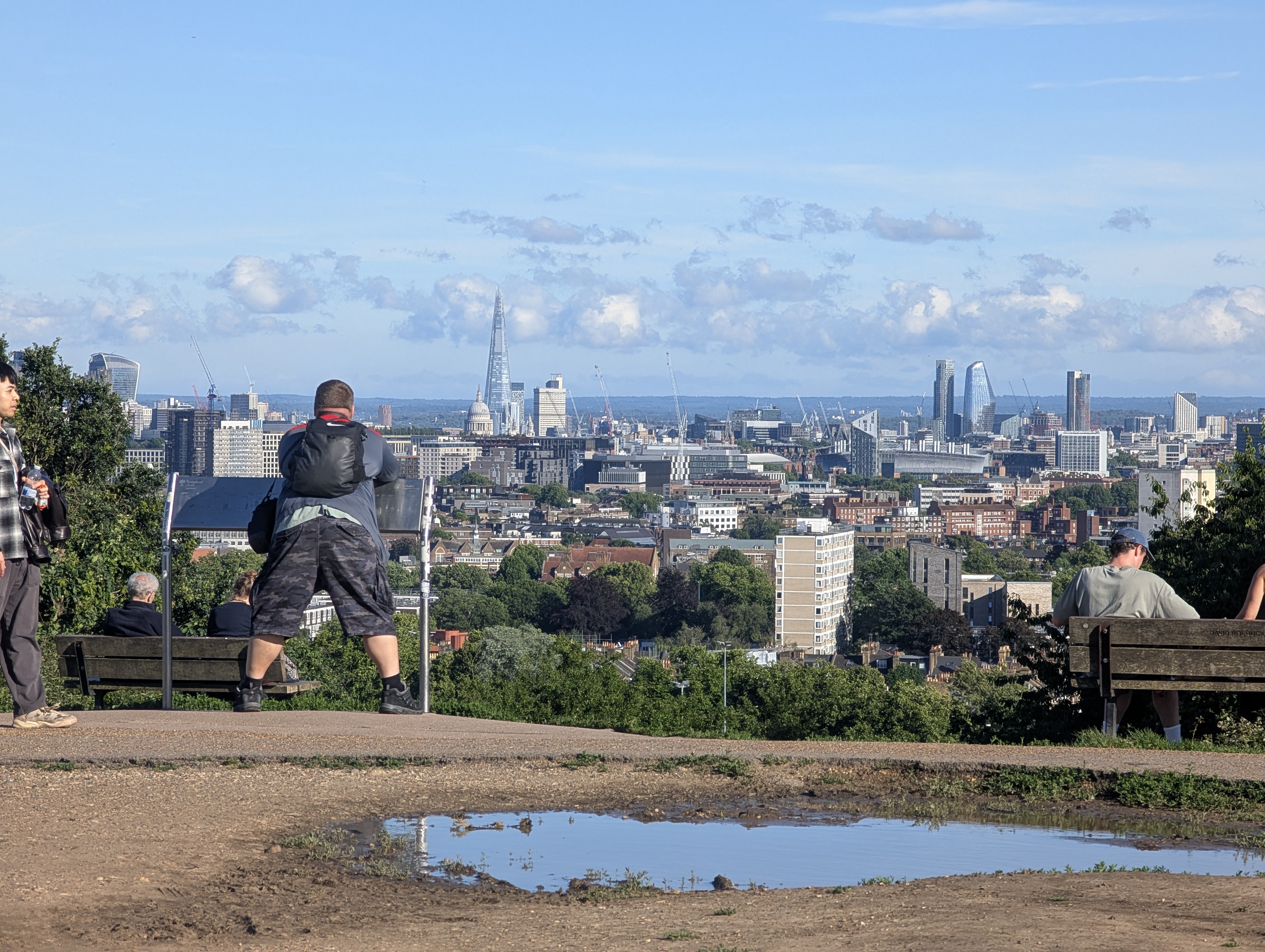
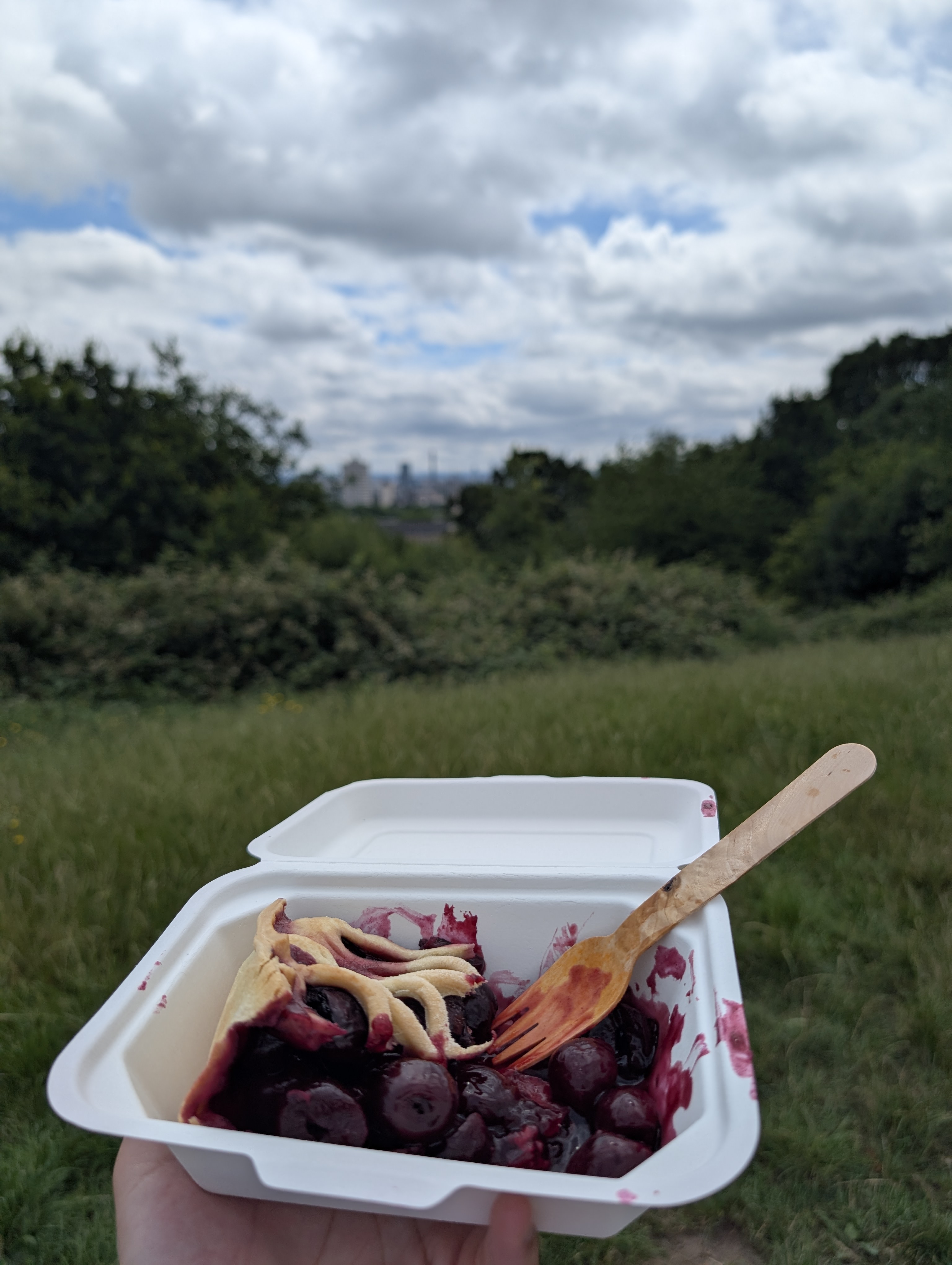
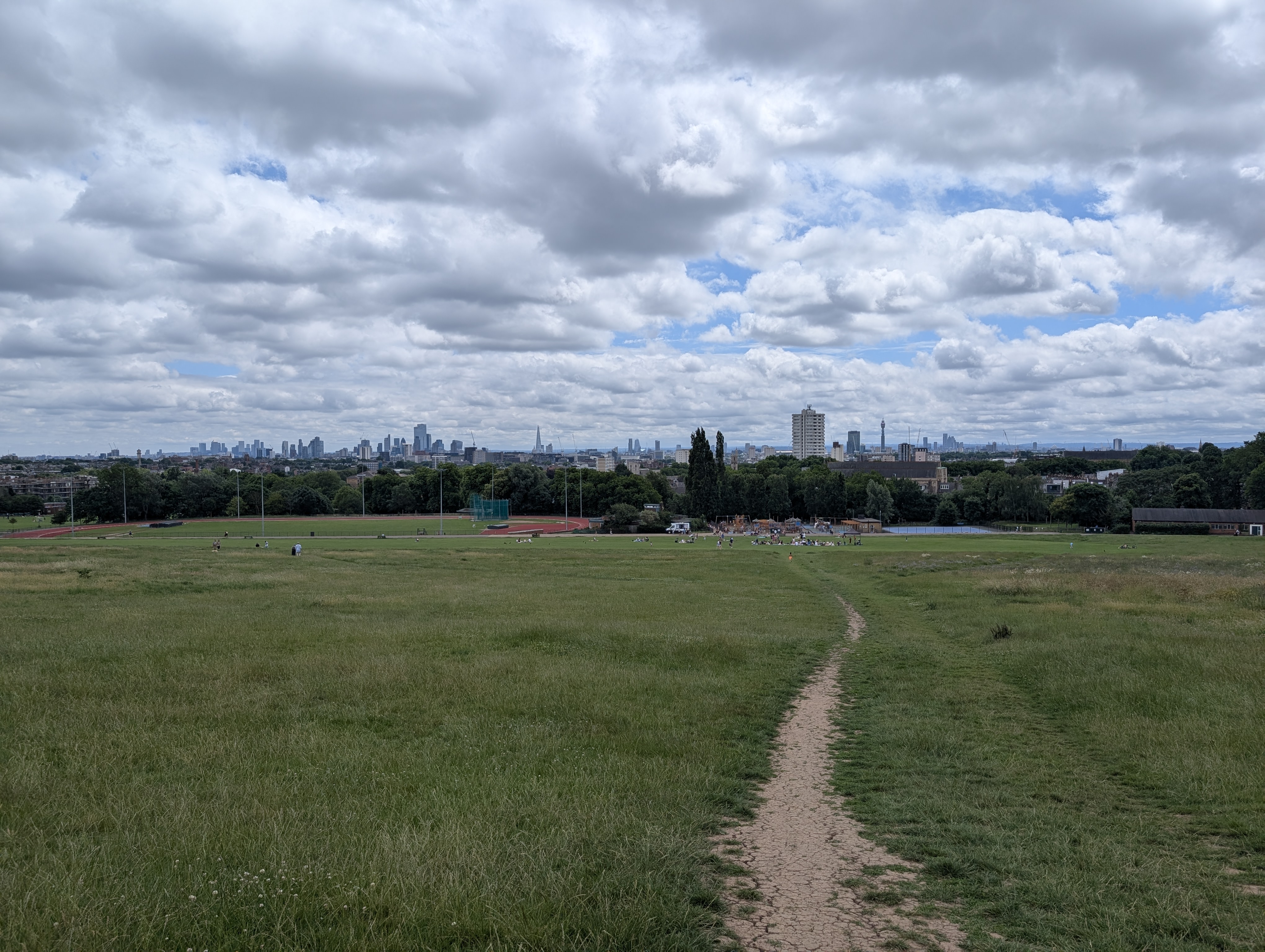
the photos up top come in part from today — saturday, june 20. a really lovely walk — i popped by the Parliament Hill Farmers’ Market, grabbed an incredibly delicious lamb gözleme and slice of cherry pie, and sat on top of the hill enjoying the weather.

throughout college and grad school i’ve had a lot of thoughts about intentionality and focus. again, i think a few things hold true:
- there’s many things in life that it’s easy for me to end up not doing, even if i want to, just because if i don’t prioritize them, they don’t happen. everything from hanging out with friends, to taking alone time, time disconnected from the digital world.
- when it comes to work, i would not describe myself as a very disciplined person. i find it extraordinarily difficult to do things that i’m not intrinsically motivated in doing. not to say that this doesn’t happen, of course; i have lots of feelings on “taking my medicine” that made up an entirely separate blog post.
- conversely, when i hit flow states in work (though also for non-work things), the time just flies by. i’ve enjoyed many evenings over the last few weeks trying to figure out how to make this structural model work. at other times, it’s been “i really want to make this LaTeX template” to “let me obsessively update the wiki i maintain for this dnd campaign” to “oh, it’s time to write a blog”.5
one of the things i’ve appreciated about grad school is the fact that i can structure my life as these waves hit. there are times where i fall asleep thinking about this cool problem i’ve been working on, or will sit in front of a whiteboard looking at squares. and there are also times where my focus takes me elsewhere, and i’m doing a musical, or writing puzzles, and so many other things.
in the context of this, there’s two big ways i’ve been framing my choice for the future.
-
i’ve come back to this post a number of times over the years, a retrospective from a professor on how they’ve approached academia. i think it’s the singular post from an academic that’s closest to my own philosophy of how i’ve approached grad school so far. some choice paragraphs:
I am not saying this approach or this list is a recipe for success. As one of my wise colleagues said, we know very little about what makes people actually succeed. Rather this is the recipe by which I have, and I am, having fun being in academia. And if I’m not having fun, I will quit and do something else. There are lots of ways to live a meaningful life.
I realize that my own case is special in many ways. It is a rare privilege to get a tenure-track faculty position at a place like Harvard. And engineering is a discipline with many reasonable career alternatives. And very, very few mothers get to raise kids with a feminist husband. Nevertheless, it seems to me that at all levels of academia, almost regardless of field and university, we are suffering from a similar myth: that this profession demands - even deserves - unmitigated dedication at the expense of self and family. This myth is more than about tenure-track, it is the very myth of being a “real” scholar.
academia provides a world for me to keep doing what i’ve been doing for the last decade — whatever is bringing joy to me. back when making the choice to go to grad school or not, i remember professors mentioning how unique it was that they could spend time on the things that mattered to them. and so long as i keep that same mentality, if i can keep that same mentality, i think academia can be joyous in many ways. spending time on research i find interesting and impactful, teaching and mentoring, thinking through hard problems with colleagues, and also the myriad of other things i care about in my life.
but then the question remains — can i? will i? for things that i don’t have the motivation to do, will i get motivation to do them? convince myself that i want to do them, even if i don’t? or perhaps, will i just not do them at all?
-
i think i have a good sense of what the academic path would look like for me — after all, i’ve been in it for the last five years. but non-academic paths are a bit murkier. there’s a few well-trodden paths that economics phds take (think tanks, government, economic consulting, data science/economist roles in tech), and while some of those are appealing — particularly, those where i could keep doing education work, like at an ed-tech startup or in policy — there’s also not getting as much control over my own time, what i do, and my work will be primarily at the behest of other people.
there’s also the math talent identification/support work, which has been a joy to be a part of for the last several years. i think there is a world — though one that requires a lot of initiative on my part — to try and do that full-time. i don’t know exactly what that road would be, but i think it’s out there. (of course, not that going into academia would exclude me from doing so — it’d just be a very different way of doing it.)
the world is big. there’s a lot of things that i could be doing.
it’s one of the reasons i so deeply appreciate having so many people in my life who aren’t economists. they help remind me that i have a lot of value and worth as a human being in ways that don’t relate to academia or economics at all. and they help remind me just how wide the tree of possible futures is. i have friends who are full-time musicians. or who are teachers. they work in bike shops, they quit their corporate jobs to do theater, they are artists, they are librarians, they are woodworkers.
and all of them, in different ways, are happy. no one can ever have everything perfect, but i think the people i’m around have found joy in the choices they’ve made.
i have been really, really lucky to be at mit for the last several years. but one major shortcoming of this institution is that, for many people, the world narrows by being at this place. of course, people do so many incredible things. they become professors, they make startups, they found NGOs, they change the world. your horizons are expanded, yes. the depth that you can go is incredible. but the ways in which people do so is … very small. take these graphs from the mit graduating student survey:
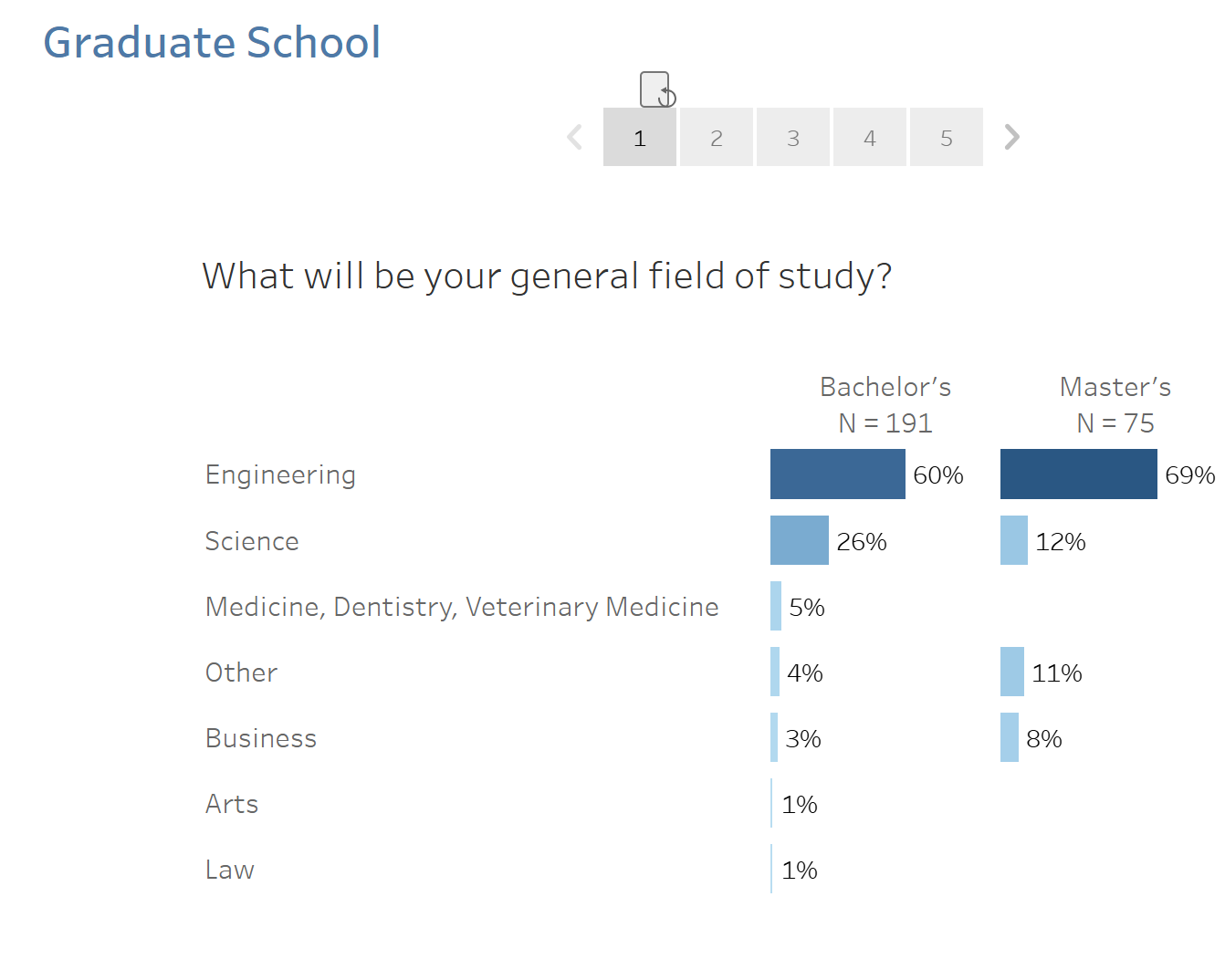
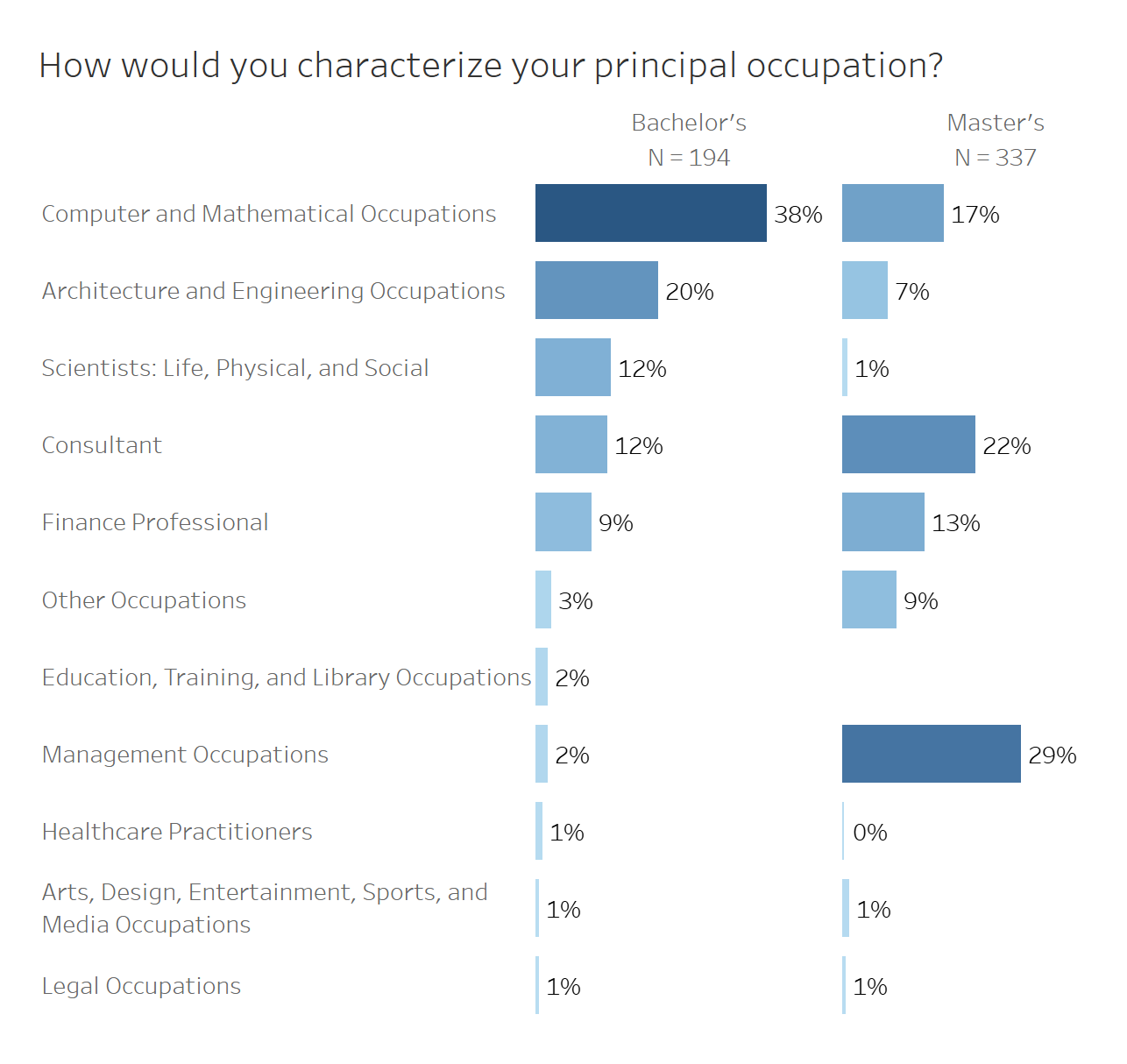
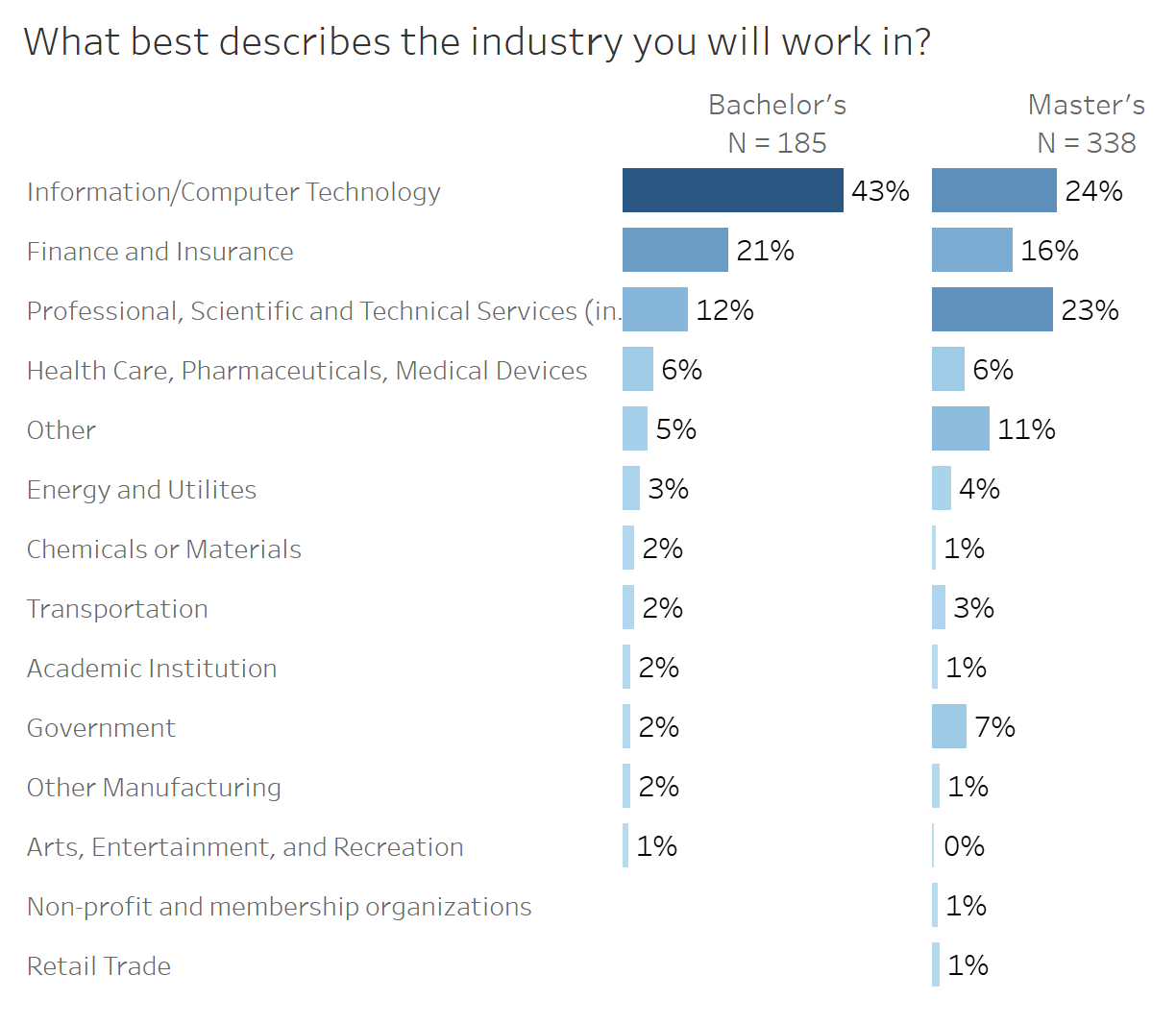
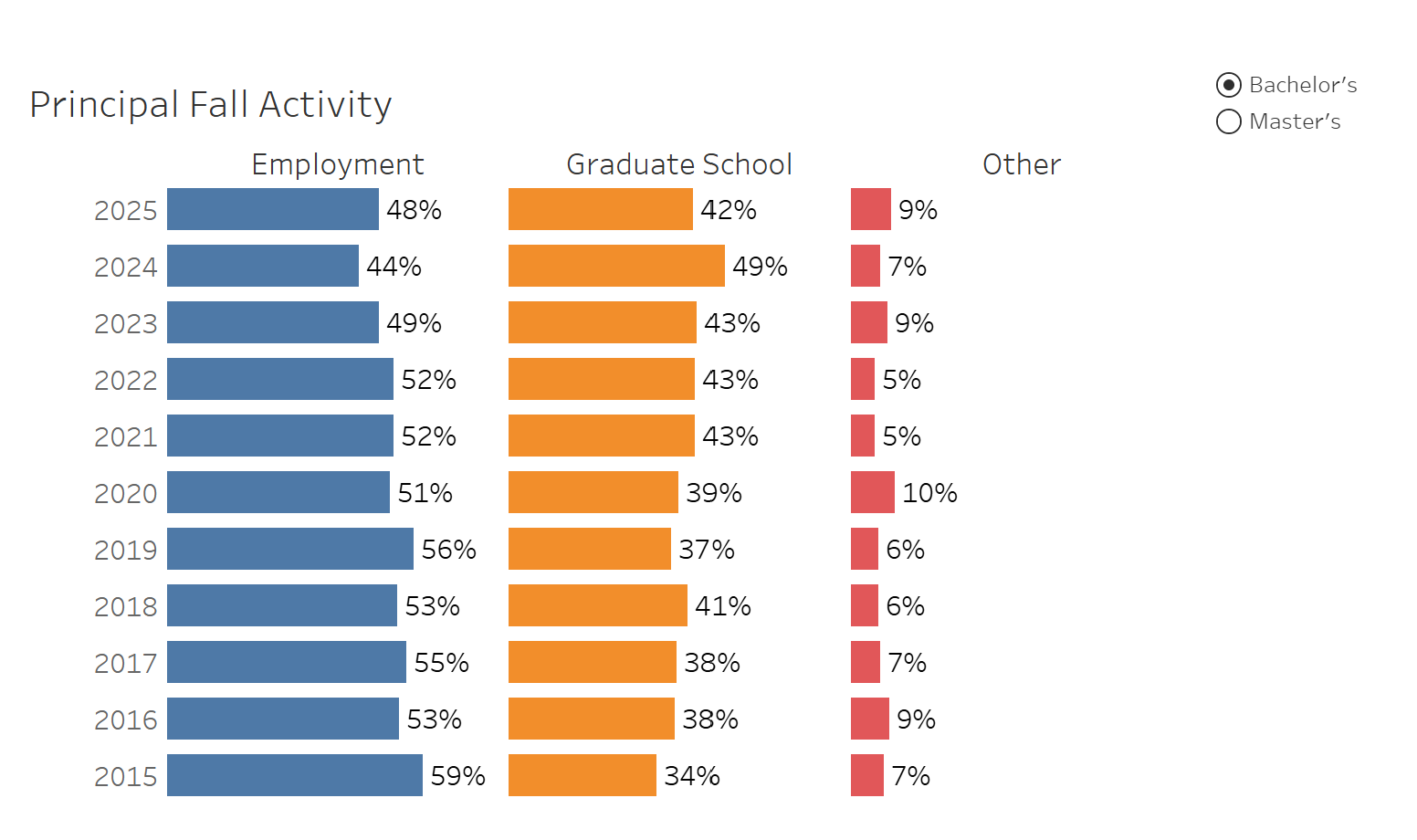
and in this context, i think it can be hard for people to remember just how many options the world contains. part of this summer is spent trying to think through what those all could be.
i’ve been coming to terms with the fact that i’d be sad if i were to leave boston.
it’s weird being a person who has preferences over places. i think this wasn’t true for much of my life. i moved around a lot as a kid, and i never made any real connections to the places i lived; those connections were made to the people that were there, and the sense of home followed those people.
that’s not to say that it’s still true — i still find home in the many, many places that are filled with my people — but boston is now the longest i’ve lived anywhere. it stands to reason there’s a lot of those connections here: the high school and college friends still in the area, the friends i’ve made through them, the theater communities i’ve joined. beyond that, boston has grown on me as a place. filled with people who care about community and each other (while cities are filled with people, i think boston truly feels like people live there in a way that stands out). there’s the fact that i know this place in and out, and can get to anywhere on a bike. silly things, like having “ice cream crawls” between all the specialty ice cream stores.
this of course, isn’t to say i can’t find other communities in other places that i wouldn’t get this level of familiarity with somewhere else — but when my thoughts wander to the idea of living in a different place, it inevitably becomes a comparison of what i’d miss about boston.
when i was choosing to go to grad school, i did think about the fact that it would be good for me to spend time as an adult living somewhere other than boston. now that it’s time to make that choice, i’m not sure that i want that anymore.
and a new line of thinking emerges. what would i give to stay here?6 it’s certainly not everything, but it’s also not nothing. the intermediate value theorem says that it’s somewhere in between, and over the next several months, i’ll have to try and find where exactly that point lies.
amidst all of the work that i’ll be doing this summer, i’m trying to make sure that i spend time reflecting on that work.
in may, i talked to some professors for advice for the summer, and one theme was common: this summer will be hard. it will suck. you will work a lot, and so be sure to take care of yourself.
but also, there is a joy in it, one last time to truly dive headfirst into research and get the chance to work on something so deeply.
and so while this is a very, very busy summer, i am trying to make sure that i find the joy in it (through calling friends back home, going on walks in hampstead heath, visiting a dnd pub that’s in the city). and i’m also trying to make sure that i think about this all. am i keeping the kind of balance i want to be, and what does that spell for a potential career as an academic? how much am i enjoying the work that i’m doing? is it what i want to be doing?
time will tell. here’s to more introspection, more reflection, and making decisions.
but for now, back off to running some regressions.
-
of course, your jmp isn’t just for applying to academic jobs — non-academic jobs also want to see it ↩
-
at the end of the day, this ends up being 1 of the 3 chapters of your dissertation7 ↩
-
good things come in threes, of course. i have only just remembered the fact that the first two posts also both revolve around this structure of three. and also the title of this post. how apt, as three is the highest number i can count ↩
-
i’ve been on a taskmaster binge again, and mostly i am thinking about jason mantzoukas’ one-liner in the middle of this ↩
-
see, eg, the fact that my last two blogs were written a week apart ↩
-
of course, this also applies beyond boston, too. the status of lgbtq+ individuals in many states means that i have broader preferences over what states and communities i live in. and i need to figure out the answer to these questions for those places, too. ↩
-
also, in what i think is a very interesting move, mit econ doesn’t actually have any form of thesis defense — you submit these three chapters, some professors read over it and give comments, and then you kinda just . graduate? feels weird to graduate without something along those lines. so… ↩
Comments